
Diving In After Amputation
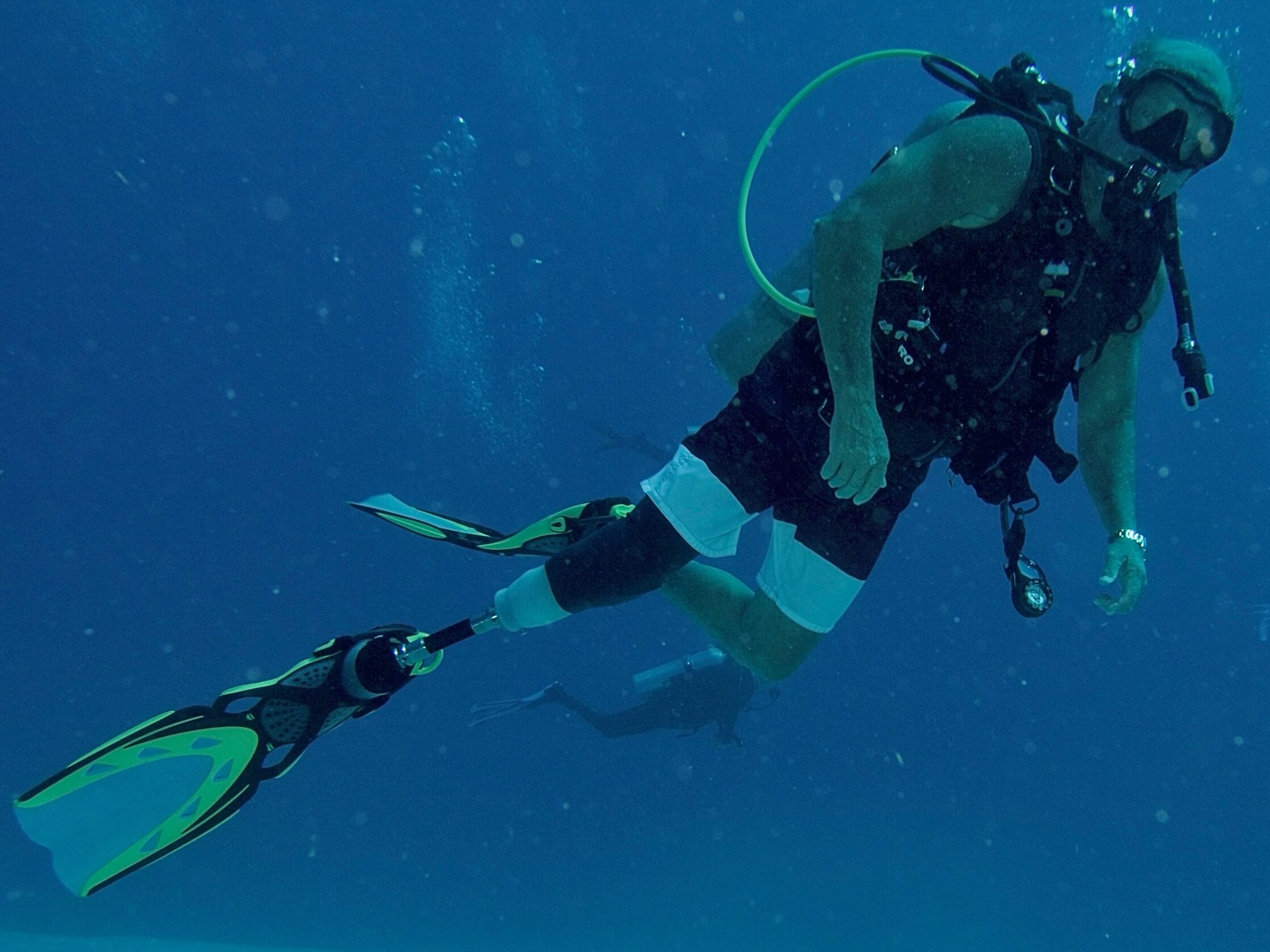
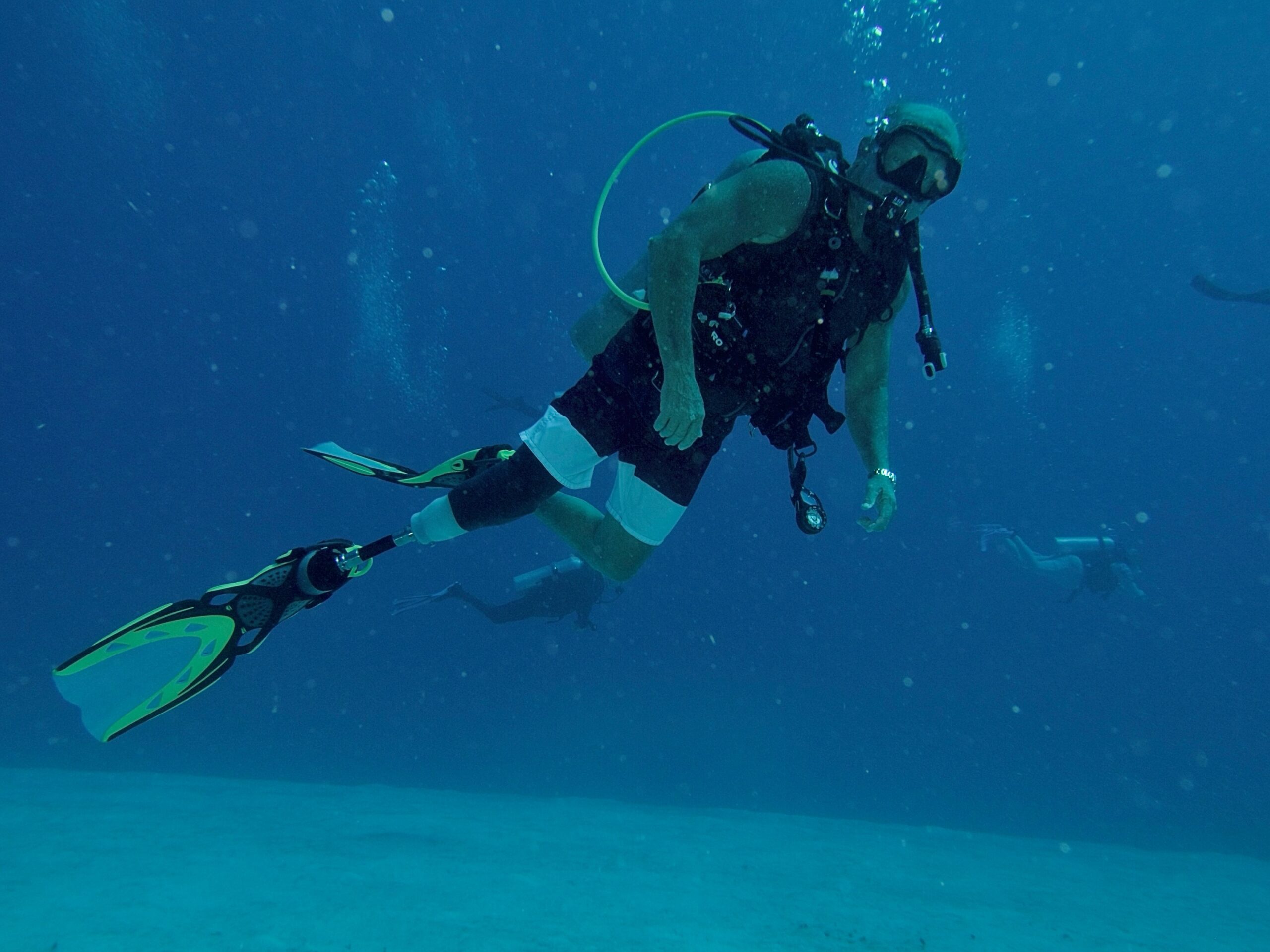
Allow us to introduce you to Harry – a 75 year old, retired physician, who enjoys a full and active retirement—snow skiing, golfing, and, most of all, scuba diving. His journey to the ocean, however, began with a life-changing event more than three decades ago.
At the age of 44, he experienced a traumatic below-knee amputation after a backyard accident. A ten-day attempt at surgical reattachment failed, resulting in his amputation. The months that followed were demanding, involving more than six months away from his busy medical practice, physical therapy, and even a revision surgery at the one-year mark. Harry’s priorities at the time were clear: return to productive work, support two children in college, and provide for his family. “With a lot of hard work and a terrific office staff, I was able to accomplish those goals,” says Harry. Despite the obstacles, he resumed practicing medicine on a full-time basis.
Two years after his amputation, in 1996, a close friend encouraged Harry to try scuba diving. His friend sensed that he needed a new physical challenge and (knowing that Harry loved water sports and boating) scuba diving seemed like the perfect fit. It turned out to be exactly that.
In the early years, prosthetic technology made diving difficult. Water-sports-oriented prosthetic components were limited, and traditional ankle mechanisms did not accommodate swim fins. That changed in the early 2000s when Rampro introduced the Activeankle, a device that allowed a prosthetic foot to remain comfortably plantarflexed underwater. “It made all the difference,” he recalls. He used that ankle for nearly 25 years before transitioning to a similar system by OttoBock, designed specifically for aquatic activity.
Fast forward to today, Harry has over 31 years of diving experience. He has explored many of the Caribbean’s most beautiful islands (some of them multiple times) and currently completes 60–75 dives per year. Still, he vividly remembers the awkwardness of those first dives. “Standing and walking with 60-80 pounds of dive gear is a challenge, especially on a boat deck that’s rolling with the waves,” he says. Lacking proprioception from the prosthetic foot and ankle added difficulty, as did the mid-water switch from walking to diving mode. He admits that, at least initially, he was afraid that the leg would slide off underwater. To his surprise, though, the silicone sleeves stayed on nicely. “A pin suspension gives me a sense of security I don’t think I would have with suction,” he adds.
Despite the challenges, the underwater world inspired and motivated Harry to get back to an active life after amputation. “The fish and corals are indescribable,” he says. “The sense of weightlessness while diving continues to thrill me.” That weightless feeling, and the sense of achievement, that comes with diving keeps him returning to the water year after year. “Diving gives me a sense of accomplishment,” he explains. “I’ve developed a host of new skills and overcome physical limitations through constant training. It makes me a stronger person, better able to withstand the ravages of aging.”
When asked about his favorite diving memory, Harry replied: “It’s hard to pick, but my honeymoon dive trip to St. Lucia remains one of my favorites.”
Today, he encourages other amputees not to shy away from the activities they once loved. “I would encourage any amputee to pursue whatever sport they enjoyed before amputation,” he says. “The prosthetic technology is out there. It just takes desire and determination to return to your former level of activity. Just about anyone can do it.”
Harry’s story is just one of many reminders that life doesn’t end after limb loss. Hear it straight from an amputee who has proven otherwise – it is possible!
January 5, 2026
