
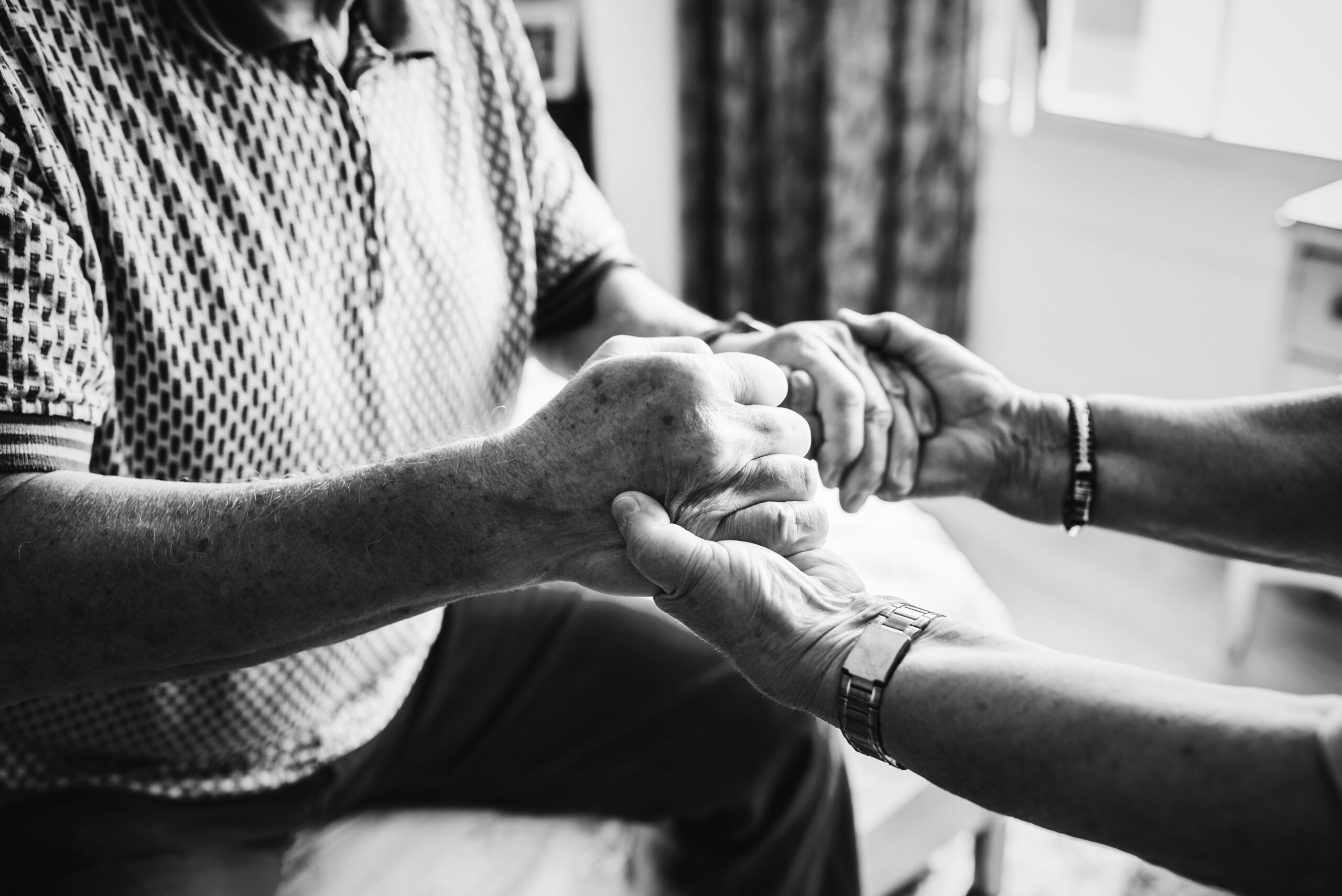
When Memory & Mobility Collide: Prosthetic Care for Patients with Dementia
As the global population ages, the prevalence of cognitive decline – including dementia and Alzheimer’s disease – continues to rise. According to Alzheimer’s Disease International, an estimated 78 million people will be living with dementia by 2030, and 139 million by 2050. Think about that for a minute… That is a jarring jump.
While pharmacological treatments can help delay symptoms, they cannot stop the progressive decline in cognitive function completely. This creates a multitude of challenges for both patients and caregivers, particularly when it comes to maintaining mobility, independence, and comfort. At Jameson Prosthetics, we’ve asked ourselves: Is there a “correct” approach to providing prosthetic care for patients with dementia?
Let’s explore that question!
A universal challenge for patients with dementia is the disconnect between their environment and their perceived capabilities within that environment. Behavioral changes, confusion, agitation, and inconsistent awareness can make traditional prosthetic rehabilitation approaches quite difficult.
Effective prosthetic care in this population requires more than just a well-fitting prosthesis. It also requires an appropriate prosthetic environment. This concept, inspired by the work of Guaita and Jones (2023), views care as a support system that includes not only the prosthesis itself but also the people, spaces, and routines surrounding a patient. There are two implications that achieve the most optimal outcomes:
- Adaptation > Restoration: Instead of the primary goal being full independence, care teams should prioritize predictable prosthetic use, increased comfort, and simplicity. Adapting rehabilitation goals to be both realistic and personalized will maximize daily capabilities. For prosthetists, this may mean incorporating intuitive design features like simplified buttons, contrasting colors, or tactile cues. These features minimize cognitive load and encourage engagement without overwhelm. Doing so promotes dignity and individual participation instead of frustration.
- Shape the Environment: Is the patient in an assisted living facility or are they living at home? Both should support, not hinder, prosthetic use. Clear pathways, consistent placement of the device, visual cues, and caregiver reminders can make a huge difference. The physical space should be predictable, accessible, and forgiving of a patient’s lapse in memory or attention.
The bottom line: Many of the functional challenges in prosthetic care for individuals with dementia stem from a disconnect between remaining abilities at a given time and the demands of a patient’s environment. While we cannot reverse cognitive decline, we can make efforts to reduce stress by adjusting both the care environment and the complexity of prosthetic intervention.
It’s more than just fitting a limb – it’s about building an overarching support system that includes people, places, and thoughtful design. Focusing on adaptation, collaboration, patience, and compassion preserves mobility, safety, and a sense of self.
Learn more:
Guaita, A., & Jones, M. (2023). A Prosthetic Environment for Individuals with Dementia. ResearchGate — Introduces the “prosthetic environment” model, emphasizing environmental adaptation and support systems for individuals with cognitive decline.
Alzheimer’s Disease International (2023). World Alzheimer Report. www.alzint.org — Provides global data, research, and resources on dementia care and prevalence.
December 1, 2025
Studio Ró
Site made by
@2022 Jameson Prosthetics
Privacy
Terms & Conditions
Address: 1407 Ashley River Road, Charleston, SC 29407
Email: jamesonprosthetics@gmail.com
Tel: 843 936 1642
Explore
With you through it all.
Jameson Prosthetics
@JamesonProsthetics
